
The best marketing isn't chiseled in stone. Apative marketing is alive, responding to new tools, shifting consumer preferences, trends, and real-time data. Changing with the trends gives brands a competitive edge, if marketing teams handle it correctly. 
Many traditional marketing tactics (like brochures, billboards, and magazine ads) aren't adaptable. Digital marketing can always be tweaked and improved based on performance. Tools like Marketing Hub use data-driven segments to help create adaptive, personalized offers. Adaptive marketing offers a greater competitive edge than ever before.
An adaptive marketing approach gives brands the flexibility to respond to real-time data about trends, user behavior, and market shifts. Do this well, and the result is enhanced customer engagement with a direct impact on revenue. Here are the tools, frameworks, and strategies to leverage in your brand's strategy.
Table of Contents
- Adaptive Marketing Examples and Use Cases
- What is adaptive marketing?
- Why Adaptive Marketing Works
- Adaptive Marketing Strategies
- Tools to Power Your Adaptive Marketing Strategy
- How to Measure and Iterate Adaptive Marketing Campaigns
- What's Next for Adaptive Marketing With AI
- Frequently Asked Questions About Adaptive Marketing Strategies
What is adaptive marketing?
Adaptive marketing is a flexible strategy where brands continuously adjust their marketing in response to real-time signals, such as trends, world events, customer behavior, and changes in technology.
Some signals and responses include:
- Customer behavior, which can trigger personalized offers based on pages viewed or actions taken.
- The time of day content is accessed.
- Where the user is based.
- And any current events.
|
Signal |
Example Response |
|
Customer behavior |
Trigger personalized offers based on pages viewed or actions taken |
|
Time of day |
Monitor user activity and send emails or publish on social media when viewers are most engaged |
|
Location |
Offer free one-day shipping to website users in a specific location |
|
Current events |
Pause or alter social media and email content during sensitive current events |
Adaptive marketing is different from agile marketing. Agile marketing has its roots in software development and focuses on how teams work. The agile approach involves sprints, rapid testing, and quick iterations. Meanwhile, adaptive marketing focuses on how marketing strategy responds to changing data, trends, and consumer behavior.
Why Adaptive Marketing Works
Adaptive marketing is effective because it allows brands to evolve and improve with:
- Technology, like AI, content marketing, reporting, and attribution tools.
- Data, including insights on consumer behavior, market trends, and social media users.
- Feedback from test groups, followers, community members, and customers.
- Customer expectations, as consumers see other brands evolve, yours will be expected to keep up.
As a marketer, I see adaptive marketing is a litmus test that tells me how much brands A) value their marketing and B) understand technology. Some brands resist updates, improvements, and development, and it really undercuts marketing ROI. That might've been fine for traditional marketing, but digital marketing has too much potential to remain rigid.
Adaptive Marketing Strategies
Adaptive marketing can take many forms. Tio strategies facilitate adaptive marketing through AI personalization, trigger-based automation, and user data-based automation. Savvy teams experiment to find tactics that work.
Targeting customers with real-time AI personalization
Real-time personalization adapts offers, messaging, or content based on live signals such as location, device, referral source, or recent activity. Instead of showing the same experience to every visitor, brands tailor interactions to what’s most relevant in the moment.
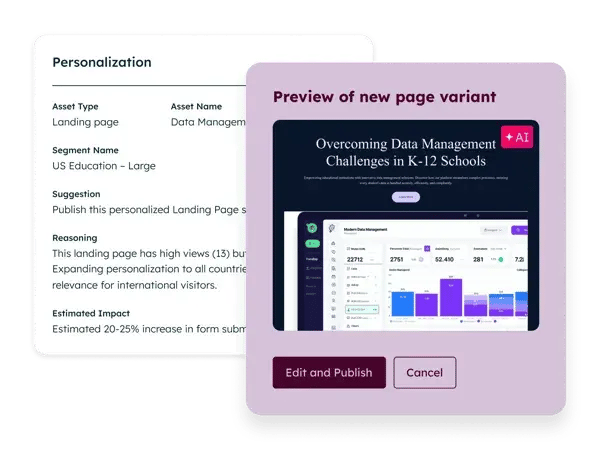
This is a top trend in 2026. In our State of Marketing survey, 49% of marketers said using AI to create personalized content was a focus. HubSpot’s Marketing Hub supports real-time personalization. Marketing Hub uses behavioral data and AI-driven segments to tailor content and offers as customer context changes.
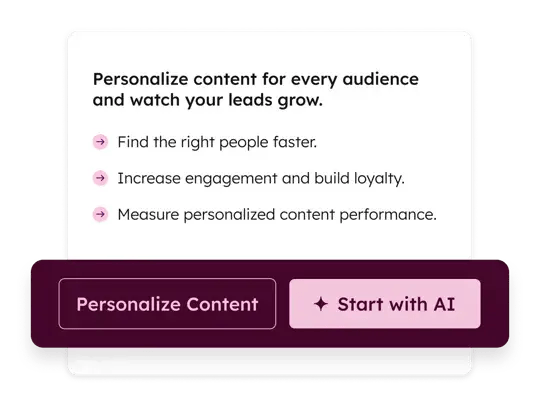
As a consumer, I find that audience segmentation makes web browsing more convenient. It‘s smart and leverages technology to improve the user experience in a way traditional marketing can’t.
Adapting messages based on consumer data
Marketers used to have to guess where their customers were. Now, brands can tailor messaging to reflect what customers are actually doing. The framework for this system can be created based on audience segments. Then, automation tools customize for individual users.
Remember, not all consumer data can be adaptively used to feed the marketing loop. I recommend choosing a few specific signals that matter most to your product. For example, Duolingo reacts to insights from consumer behavior with tailored push notifications and emails about product usage.
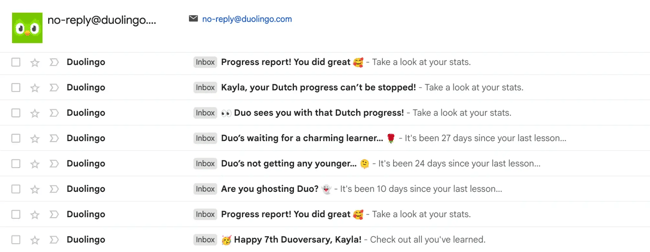
HubSpot’s Marketing Hub centralizes CRM and behavioral data, so marketers can adapt campaigns based on how customers move through the funnel.
Setting trigger-based rules for adaptive content
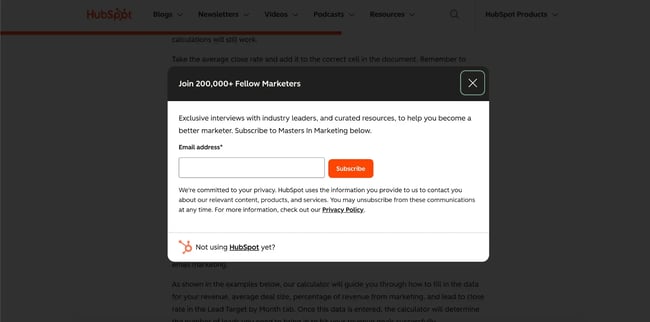
Trigger-based automation focuses on responding to specific actions or inactions with predefined “if this, then that” responses. Marketing teams can then adapt content automatically without continuously changing personalization rules or audience segments.
Website pop-ips are one common “if this, then that” trigger. Below, a website pop-up that appears as a desktop user moves their mouse towards the exit button:
Here are some more trigger ideas and examples.
|
Trigger |
Adaptive Content/Action |
|
First product interaction |
Offer onboarding tips related to the feature used |
|
No activity for a set period |
Trigger a re-engagement message or offer |
|
Content download |
Recommend related content or next-step resources |
|
Trial nearing expiration |
Send upgrade prompts or value-focused reminders |
Pro tip: In Loop Marketing, trigger-based automation supports the Amplify stage by ensuring the right follow-up happens at the right moment, keeping prospects engaged.
Adjusting content to align with current trends
Adjusting content to align with current trends can lead to higher social media and email engagement. Adaptive marketing grants teams the speed to hop on trends, even if the lifespan of a trend might only be a week. Marketing teams need to adapt to trends as they emerge in real-time.
However, chasing trends isn't always effective. Some trends can feel off-brand or unrelated to the product. Teams that create successful campaigns around trends have a clear understanding of their tone, taste, and point of view (step one in Loop Marketing). Marketers then know what trends to capitalize on and which to leave behind.
I love seeing brands take their normal content and adapt it to fit a trending topic or style, like this example of Canva blending their content marketing with the Stranger Things trend:
Continuously testing
Experimental testing (such as A/B, multivariate, and holdout tests) helps teams understand which marketing efforts are driving engagement and conversion. With A/B and adaptive testing tools built into HubSpot Marketing Hub, teams can test variations continuously and apply learnings without launching separate campaigns.
See an example below of A/B testing email subject lines:
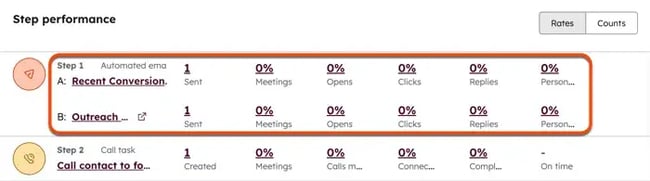
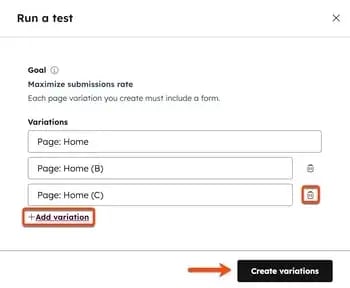
Marketers who are comfortable testing multiple elements simultaneously can move beyond A/B testing to multivariate testing. With Marketing Hub, up to five web page versions (such as landing pages or sales pages) can be tested at once.
Tools to Power Your Adaptive Marketing Strategy
Marketing Hub
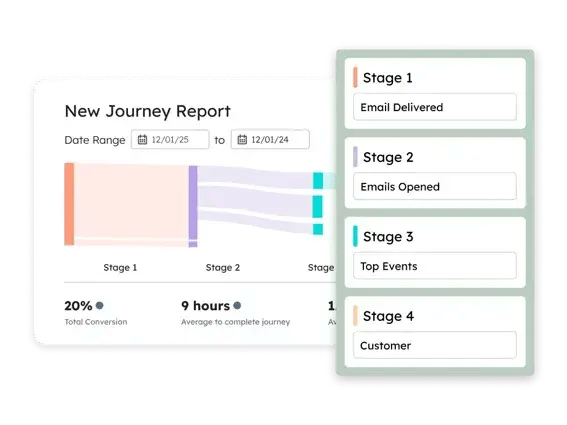
HubSpot Marketing Hub helps teams be adaptive by turning customer data into action. Adaptive marketing strategies require regular measurement and feedback loops. By centralizing data, testing, and automation in Marketing Hub, teams can respond to changing signals without relying on disconnected systems.
Price: Free tier, with paid plans starting at $9/month
HubSpot Marketing Hub helps teams act on data and implement adaptive marketing strategies. Meanwhile, the unified Smart CRM powers segmentation and adaptive triggers.
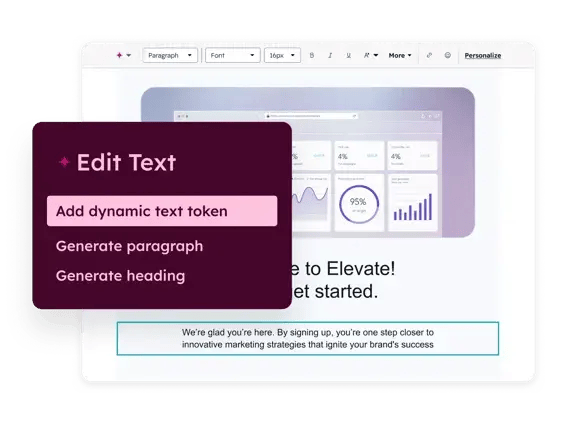
Adaptive marketing and execution features include:
- Adaptive testing for website and landing page optimization
- A/B testing for emails and pages
- Behavioral event tracking to trigger responses based on user actions
- AI-driven segmentation that updates audiences dynamically
- Marketing automation for “if this, then that” workflows
- Integrated reporting to support iteration
What I like: HubSpot’s 2026 State of Marketing survey found that leveraging automation was the #2 trend of the year. I appreciate that Marketing Hub's features make it easy to act on this trend and marketing data.
SegMetrics
SegMetrics helps marketing teams understand how changes in strategy affect revenue over time. By connecting customer behavior, cohorts, and lifecycle data to business outcomes, SegMetrics supports faster iteration based on what’s actually driving growth.
Price: Starts at $57/month
Key adaptive marketing capabilities include:
- Revenue-based attribution to evaluate the impact of changes
- Cohort analysis to compare performance before and after adaptations
- Lifecycle insights to identify drop-off and re-engagement opportunities
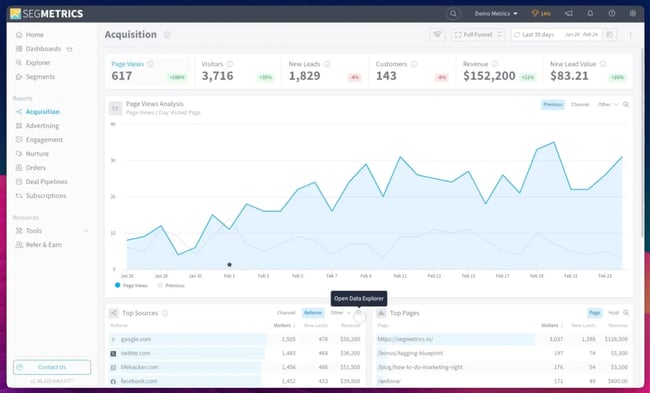
What I like: SegMetrics works well for businesses with free trials, subscriptions, upsells, or hybrid funnels/mixed models that are hard to evaluate with standard attribution.
Hotjar
Hotjar helps adaptive marketing teams understand how users interact with content, not just whether they convert. It adds qualitative context to performance data, making it easier to identify friction and improve.
Price: Free with paid plans starting at $49/month
Key Hotjar features include:
- Heatmaps and scroll depth to reveal engagement patterns
- Session recordings to observe user behavior
- On-site surveys for direct customer feedback
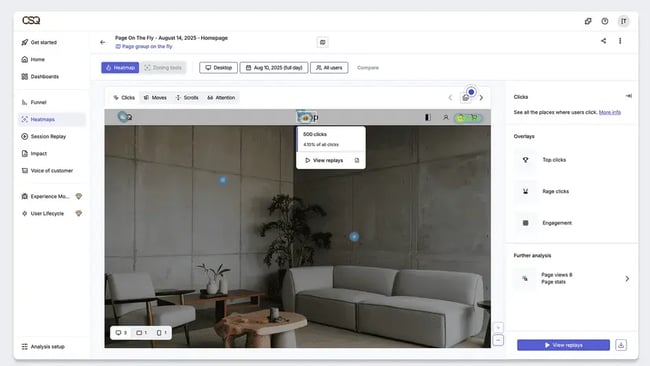
What I like: The scroll depth monitoring and heatmaps add great qualitative insight to enrich the quantitative data, like time spent on page, bounce rate, etc.
Optimizely
Optimizely supports adaptive marketing by enabling teams to personalize digital experiences and test those changes in a controlled way. Its personalization tools allow marketers to tailor content and experiences for different audiences while measuring impact before rolling changes out more broadly.
Price: Custom pricing only
Key Optimizely features for adaptation are:
- Audience-based personalization for websites and digital experiences
- Experimentation to validate personalized variations before scaling
- Rules- and data-driven targeting to adapt experiences by segment or behavior
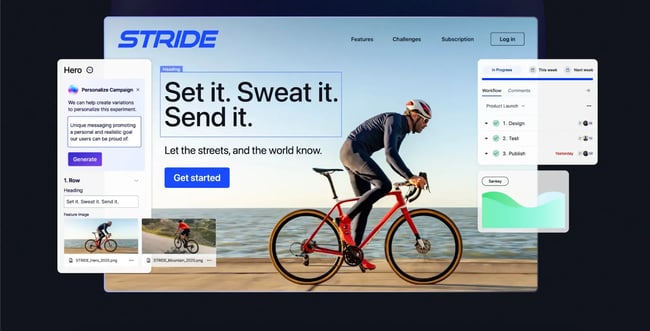
Best for: Teams that want to personalize experiences thoughtfully and test changes before applying them across their entire audience.
Google Trends
Google Trends is a free tool that marketing teams can use to identify market trends and changing consumer preferences.
Price: Free
Key Google Trends features related to adaptive marketing include:
- Real-time shifts in search demand and interest
- Early momentum detection with years of search history
- Search data customizable by location, timeframe, categories, or search type
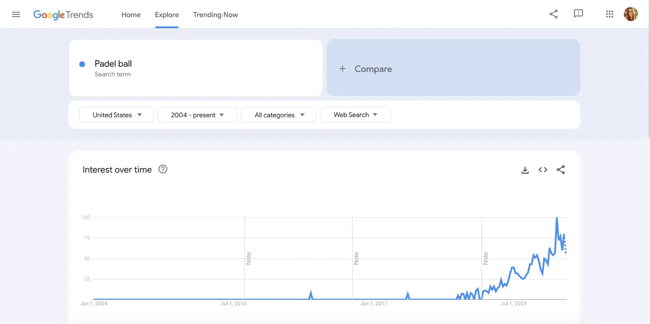
What I like: Conversations may happen all over the internet, but if something becomes a true trend, it will be reflected in Google search, even if it originated on TikTok, Reddit, etc. Seeing the history over time helps teams adapt messaging and content topics quickly.
How to Measure and Iterate Adaptive Marketing Campaigns
Successful adaptive marketing campaigns can generate different success metrics. Teams should track revenue, lead generation, sales velocity, engagement rate, and owned channel growth.
Revenue Impact
Monitoring revenue by campaign or audience segment ties adaptive marketing efforts directly to business outcomes. Teams should measure revenue performance before and after changes to see how much the adaptations are contributing to growth.
Revenue impact can be measured by connecting website, CRM, and campaign data in a single reporting system, like HubSpot. Marketers can then review how different campaigns or segments contribute to conversions over time. While attribution is rarely perfect, directional insights (like common entry points or conversion paths) can guide iteration.
Revenue impact is the most important metric, but it‘s not the only metric that matters. It’s also important to review revenue contextually with sales velocity.
Sales and Falloff Velocity
Sales velocity is a commonly used metric that estimates how quickly leads convert into customers. It’s typically calculated using the following formula:
- Sales velocity = (number of opportunities x deal value x win rate) / length of sales cycle
Velocity is often overlooked, according to Scott Queen, senior product strategist at SegMetrics, and not just sales velocity. Queen sells a product with a subscription model and a two-week free trial, so a sale is predictably made in two weeks. The velocity he pays more attention to is fallout velocity: when do customers cancel their memberships?
"If I notice that people fall off a subscription around three or four months, then maybe I do something at the three or four-month mark to make sure that they're engaged,” Queen shared.
Lead Generation Rate
Lead generation rate measures how effectively marketing efforts convert visitors into leads. Instead of tracking lead volume alone, lead generation focuses on the percentage of users who take a qualifying action after engaging with content.
For this data to be impactful, a baseline will need to be established before the content is adapted to measure change. Comparing lead generation rates before and after updates helps teams understand exactly which adaptive strategies are improving acquisition.
HubSpot Marketing Hub connects forms, landing pages, automation, and reporting. Marketers can then measure how adaptive campaigns contribute to lead growth over time.
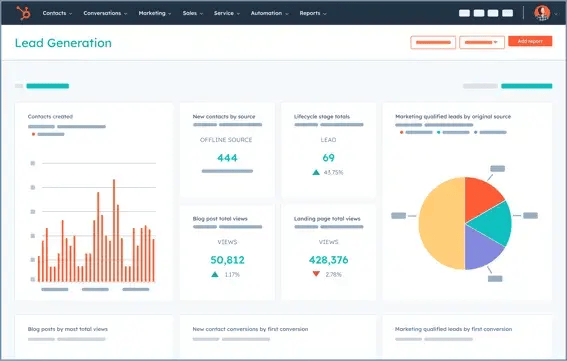
Source
Engagement Rate
A higher engagement rate doesn't directly affect revenue. However, a healthy/growing engagement rate provides important signals about the effectiveness of marketing efforts. Some engagement measurements include:
- Website behavior, like the amount of time on page, button clicks, scroll depth, and shares.
- Email engagement, like opens, replies, and clicks.
- Social media content: Likes, comments, saves, followers
Some marketers consider engagement rate a vanity metric, and that can be true if revenue growth isn‘t also being considered. I value engagement because it’s a strong signal from viewers about which content marketing strategies are of most interest to them.
Owned Channel Growth
Owned channel growth measures how effectively marketing efforts move audiences from borrowed platforms (like ads, social media, and search) to channels that a brand controls. Owned platforms offer a more reliable line of communication to customers and give teams more flexibility to adapt messaging over time. Common owned channels include:
- Email subscribers.
- Private communities or memberships.
- Customer accounts or dashboards.
- SMS or messaging lists.
- App installs or logged-in users.
I pay close attention to owned channel growth because it reflects long-term marketing health. When adaptive strategies work, audiences don’t just engage once: They opt in, return, and stay connected in environments where I can continue testing and tailoring content to them.
Aldi
Aldi is a discount supermarket that uses social media to maximize its marketing, consumer engagement, and positioning. The reaction to consumer and platform trends has not only amplified its social media marketing efforts, but it's even contributed to the creation of trendy products.
Some brands try to look perfect online. I love Aldi‘s authenticity. The brand’s marketing efforts have created a high-value feedback loop where customer reactions directly inform future content and promotions.
Amazon
With an estimated 12-13 million orders per day, Amazon has more data at its disposal than most companies, and it puts that data to work.
Logged-in users see adaptive recommendations broken down by category based on browsing behavior. New visitors see top products across categories, with the promise of tailored recommendations once an account is created.
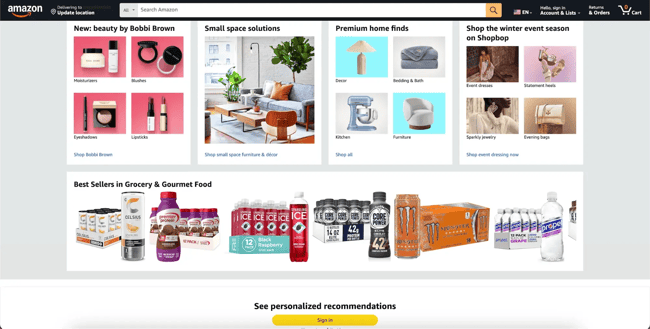
The algorithm performs real-time data analysis on behavior. Refresh the page, and some of the old recommendations that didn't inspire a click are replaced with new products. Data-driven insights drive a highly personalized consumer experience that directly impacts time spent on page and revenue.
Astronomer
Astronomer is a data orchestration platform that was skyrocketed to mainstream consciousness by bad PR: The CEO was caught on a viral kiss-cam moment at a Coldplay concert in July 2025. After a relentless news cycle, the company took hold of the mic by hiring Gwyneth Paltrow (ex-wife of Coldplay's frontman) to deliver a positive message about the company.
This is called crisis PR, and it‘s one of the oldest forms of adaptive marketing in the book. This way of adapting to a viral news moment may sound like an extreme example, but I don’t think it's that different from the COVID-19 litmus test.
All companies were tested to see how responsive their marketing plans were to fluctuating market conditions and consumer behavior. Many failed, acting like it was business as usual and publishing generic promotional materials. It felt out of touch, affecting customer sentiment.
What's Next for Adaptive Marketing With AI
When surveyed for HubSpot’s 2026 State of Marketing report, 47% of marketers said that leveraging automation was a top trend they were exploring. AI is already helping marketers analyze content results and adapt campaigns.
Next comes agentic marketing, where autonomous AI agents will make the changes themselves. Within HubSpot, AI features like Breeze’s AI Segment Suggestions support this shift. Teams can adapt targeting in real time based on behavior and performance signals.
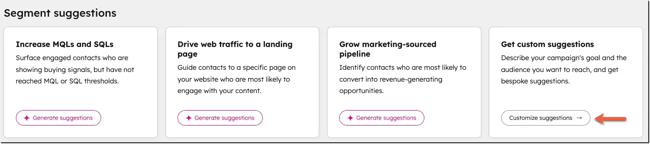
AI-powered tools point toward a future where adaptive marketing becomes faster, more precise, and increasingly automated.
Frequently Asked Questions About Adaptive Marketing Strategies
Is adaptive marketing the same as agile marketing?
No, adaptive marketing is not the same as agile marketing. Agile marketing refers to how teams work (rapid testing and quick iterations). Adaptive marketing refers to a dynamic strategy that responds to changes (data, technology, and trends).
What tools do I need to start adaptive marketing?
To start adaptive marketing, teams need tools for data collection and analysis, experimentation, automation, and trend monitoring. Platforms like HubSpot Marketing Hub can help centralize these efforts by combining analytics, testing, and automation in one system.
How quickly can teams see impact from adaptive strategies?
With sufficient traffic and data, teams can often evaluate early results of some adaptive strategies within one week.
Can small teams run adaptive marketing effectively?
Yes, small teams can often run adaptive marketing more effectively than larger teams because they face fewer approvals and can make faster decisions. This speed makes it easier to test, experiment, and adjust course.
How do I get executive buy-in for adaptive marketing?
Executive buy-in for adaptive marketing depends on clearly connecting changes to business outcomes. Consider using a single source of truth, like HubSpot’s analytics tools, to show how adaptive decisions correlate with growth or revenue. This will build confidence and alignment with leadership.
Adapt and Grow
Adaptive marketing isn't new, but the opportunity for brands keeps increasing. Today, AI-powered technology provides more opportunities for dynamic, personalized marketing. Real-time personalization, faster experimentation, and data-driven decision-making help marketers determine what offers to run at key moments.
I think that brands and marketing agencies owe it to their customers (and themselves) to engage with the real-time insights at our fingertips and keep refining what we present to consumers.
That‘s easy with HubSpot’s Marketing Hub, which combines CRM, marketing data analytics, and automation into one seamless interface. Schedule a demo to try it for your team's next campaign.

from Marketing https://ift.tt/A96TmfF
via Sumanta Biswas


![How to Create an SEO Strategy for 2023 [Template Included]](https://lh3.googleusercontent.com/blogger_img_proxy/AEn0k_tkkvi4LYTjxACoz6NMAnpcE2RQNTkdpOD0bv9lL45rixISyvilHevq6s3JkMZMvsf5Maw1dZc2AO_HtQBAr-Du8SrPDuctQ0No6HxvrKryX168LKiJTrO6Hk2NNNrWflgQjIV8-hWs_dOspTbIdYMp_Pxm57Ru=w680)
![How to Create an Infographic in Under an Hour — the 2024 Guide [+ Free Templates]](https://lh3.googleusercontent.com/blogger_img_proxy/AEn0k_v9GjrIXb32kFh8jd-MY8hQT06b-Mdk91c733EHKJsO0NuXQ8KkSG2fiBhGeUB9WxEg1rvTu0OvCw6vkYomrBp0UNn_0nZJ8TsuUQL1wtlmyj8veFt7RYe1LA4Y6U9uNdAuSDIe22ySwWIJUgwWxqI48NRo8q0MPg=w680)
0 Comments